
Living with a dog should feel enjoyable, not like a constant battle.
Everyday Life Skills focus on practical, reward-based training that helps you and your dog enjoy life together with greater confidence, understanding and ease.
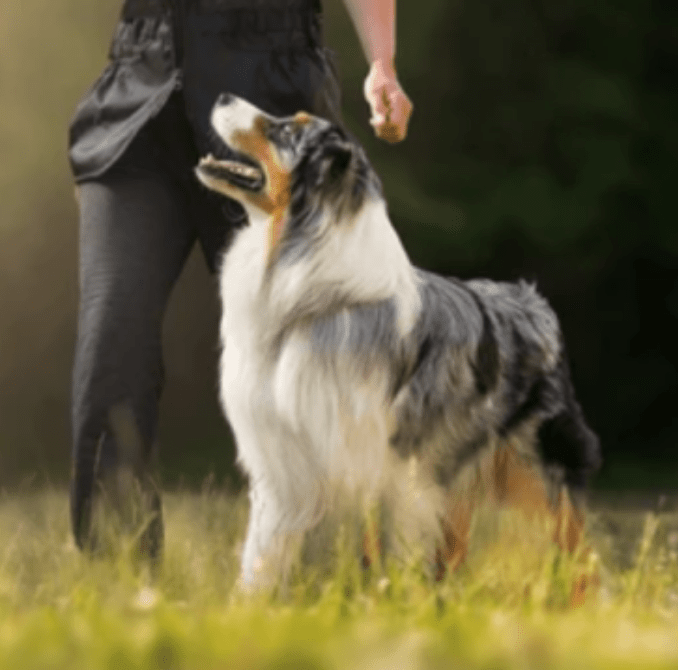
Whether you’re starting from scratch, feeling overwhelmed, or have tried dog training before and found it didn’t stick, these one-to-one training sessions are designed to meet you where you are. Training should be a safe, supportive space — not somewhere you feel judged or afraid to get it wrong.
Does life with your dog feel harder than you imagined?
Perhaps you recognise some of these:
- You’d love to let your dog off lead, but you don’t trust their recall.
- Walks have become stressful because your dog pulls, zig-zags or gets over-excited.
- Your dog is easily distracted and seems to forget you exist when something more interesting comes along.
- Your dog struggles to settle at home or when you’re out and about.
- You’d love to take your dog to a café, pub or new place, but you’re worried they won’t cope.
- Your dog has plenty of energy but you struggle to know how best to channel it.
- You want your dog to be calmer, more focused and easier to live with.
- You know your dog isn’t being “naughty” — you just need to understand what they’re doing and how to teach them something different.
You don’t need a perfect dog. You need a dog who can navigate everyday life with you.
What would you like to make easier?
Every dog is different, and the things you want to change won’t necessarily fit neatly into one category. These are some of the most common reasons owners come to me.
‘I just want to be able to trust my dog to come back.’
More Freedom

Being able to call your dog back reliably opens up so many possibilities — from woodland walks and beach adventures to simply giving them more freedom to explore.
We’ll build the foundations of a strong recall, gradually increasing distance, distractions and difficulty as your dog becomes ready.
We’ll work on:
- Building a strong, consistent recall
- Understanding what motivates your dog to come back
- Developing reliability around real-world distractions
- Building distance and duration gradually
- Creating safe opportunities for off-lead freedom where appropriate
The goal isn’t simply getting your dog to come back in a quiet garden. It’s building the skills and understanding that allow you to enjoy more freedom together.
‘I just want to enjoy walking my dog.’
Easier Walks
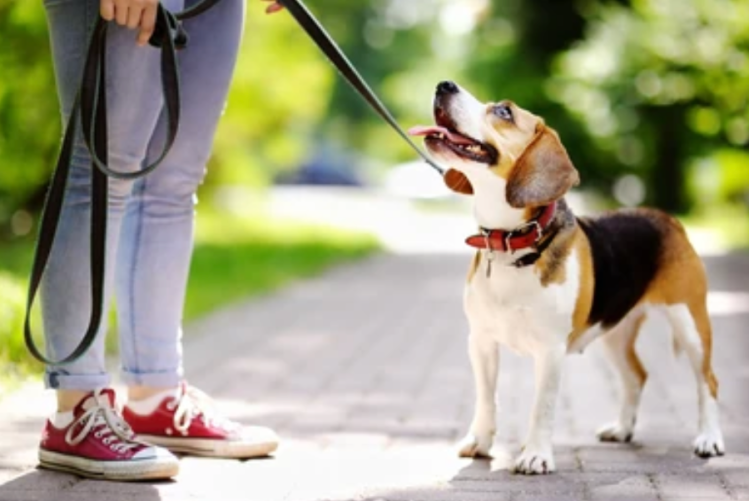
f every walk feels like a workout, you’re not alone.
Loose-lead walking is about teaching your dog how to walk with you, understanding what motivates them and building the skills that make walking together easier.
We’ll work on:
- Understanding why your dog pulls
- Building engagement and communication
- Teaching clear, consistent walking skills
- Choosing appropriate equipment for your dog
- Gradually increasing duration and focus
- Helping your dog cope with everyday distractions
The goal is a dog who can walk with you rather than constantly pulling you through the world.
‘I just want my dog to switch off.’
A Calmer Life

Some dogs seem to have two speeds: hyper and asleep.
They struggle to settle, constantly demand attention, become over-excited when something happens or find it difficult to relax when you’re out and about.
Learning to settle and regulate arousal is an important life skill — and it can be taught and practised.
We’ll work on helping your dog understand how to relax, focus and settle both at home and in the wider world.
This might include:
- Teaching your dog to settle on cue
- Building calmness into everyday routines
- Developing focus and impulse control
- Helping your dog cope with stimulating environments
- Teaching your dog how to switch between activity and rest
- Supporting calm behaviour in places such as cafés, pubs and parks
Because wouldn’t it be lovely to sit down with a coffee or a pint and actually enjoy it, rather than spending the entire time managing your dog?
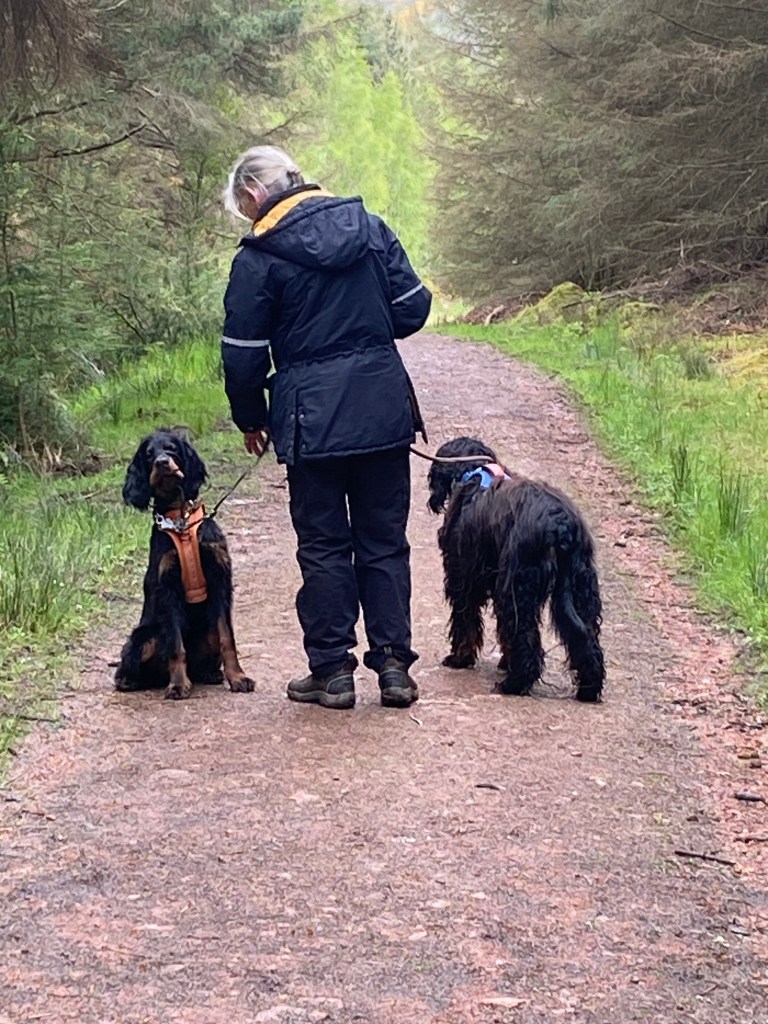
‘Although I’ve owned Gordon Setters for over 45 years, I lost confidence after my older dog was attacked while on lead by an off-lead dog. When my new Gordon Setter puppy arrived, I wanted to feel more in control, especially as I’m getting older.
Kim started working with us when he was just eight weeks old. Once we could get out and about, we focused on all the things I wanted to enjoy with my dogs – country walks, visiting cafés and teaching him to settle calmly in everyday situations.
Kim always focused on what we wanted to achieve rather than following a set programme. He responded so well and has become a delight to own.
Kim is a lovely lady and an excellent trainer who uses kind, thoughtful methods that strengthen the bond between dog and owner.‘
– Sue and Flyte
The Everyday Life Skills Programme
Three sessions. A clear plan. Practical support for real life.
Most owners make better progress when they have time to practise, come back with questions and build on what they’ve already learnt.
That’s why Everyday Life Skills is offered as a three-session coaching programme, rather than as individual one-off appointments.
Your programme includes:
Three × 60-minute one-to-one coaching sessions
We’ll work together over several weeks, allowing you and your dog time to practise and develop each skill.
A personalised training plan
Clear, practical exercises to work on between sessions, tailored to your dog and your circumstances.
Support between sessions
You’ll have guidance between appointments so you’re not left wondering whether you’re doing it right or what you should work on next.
Training for real life
We’ll focus on the situations that actually matter to you — whether that’s walking around the village, exploring the woods, visiting the pub or simply having a dog who can settle at home.
Effective, reward-based training
No intimidation, fear or punishment. Just clear communication, thoughtful training and helping your dog learn what you actually want them to do.
Everyday Life Skills Programme: £180
3 × 60-minute one-to-one sessions
Includes your personalised training plan and support between sessions.
Most sessions are delivered face-to-face, because practical coaching is often most useful when we can work with you and your dog in the environments where you actually need the skills.
Remote sessions can also be arranged where appropriate.
Additional follow-up sessions — £65
Follow-up sessions are available once you have completed the three-session programme, if you’d like further support or want to work on the next stage of your dog’s training.
A flat travel fee may apply for sessions outside my local area. Any travel charges will always be confirmed before booking.


